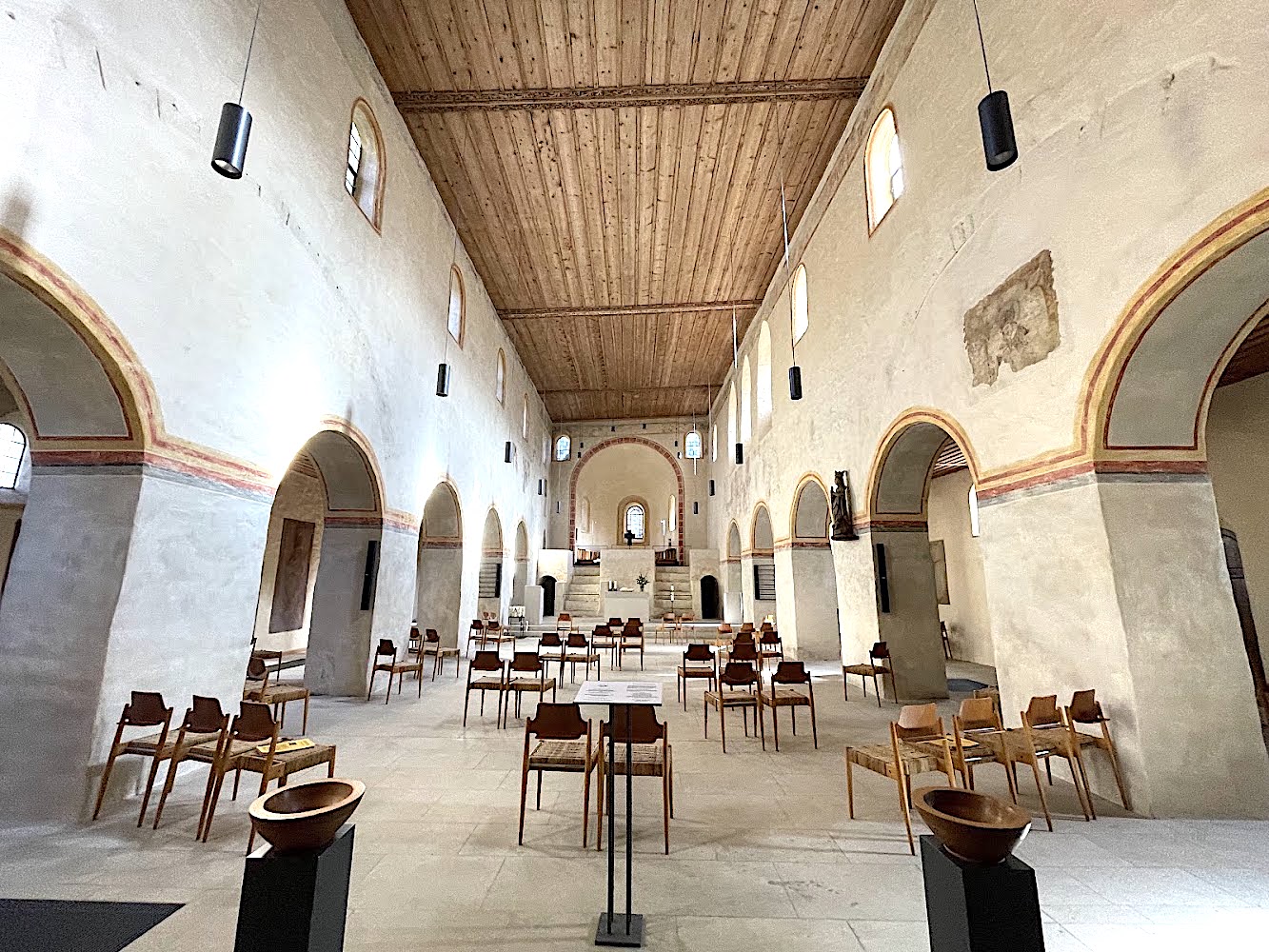
I am so much looking forward to perform in my most favourite natural acoustics at the Monestary Church of St. Cyriak in Sulzburg, located in the Markgräflerland region of southwestern Germany (Baden-Württemberg). It is one of the oldest surviving churches in the country and a significant historical monument of early medieval architecture.
I was so lucky to record SWEET WORDS, my 4th album of Royal music by His Majesty King Bhumibol Adulyadej the Great in tis miracle place with the perhaps best acoustics for classical guitar in the world.
Key Historical & Architectural Details
- Ottonian Architectural Heritage
Built around 993 A.D. by Count Birchtilo of Breisgau (a liegeman of Holy Roman Emperor Otto III), the church is a prime, rare surviving example of Pre-Romanesque (Ottonian) architecture. Fewer than 50 buildings from the Ottonian period remain intact in Germany. Dendrochronological testing reveals that timber used for the church tower was felled during the winter of 996 A.D. - Monastic Origins & Evolution
For several centuries, the church served as the spiritual heart of a Benedictine women's convent. - The monastery was dissolved in 1555 following the Reformation.
- While the church itself continued to serve as the local Protestant parish church, the surrounding monastic complex fell into disrepair, suffered severe damage in the Thirty Years' War, and was mostly destroyed by fire in 1796.
- Interior Features & Preserved Artwork
- Ottonian Frescoes: The interior contains rare remaining fragments of original Ottonian wall paintings and frescoes.
- Structural Design: The building reflects classic early medieval stonework, featuring a simple basilican layout with alterations that show how craftspeople adapted the building over successive medieval centuries.
Tags: Miracle Acoustics, Monestary Church, Sweet Words
23/08/26 10:25 Filed in:
The PreparationFor the audience, a concert is usually 90 minutes or so. You come, you listen, you enjoy the music—and then it’s over.
Sometimes people wonder why an artist is paid so much for performing for just an hour or two. What is easy to forget is everything that happens before those 90 minutes.
There are countless hours of practising, rehearsing, planning, travelling and preparing. For a tour, this can go on for weeks or months, involving not only the artist but many people working behind the scenes.
So if you look at the fee against all those hours—not just the time spent on stage—the calculations quickly normalize.
We don’t spend our working lives performing for 90 minutes. We spend them preparing for those 90 minutes.
Of course, the financial return can vary, and sometimes it hardly reflects the time and effort that goes into a performance. But there is another kind of return: the satisfaction of creating something meaningful, connecting with an audience, and continuing to grow as an artist. That part is difficult to put a price on.
Perhaps that is one of the strange things about being an artist: the audience sees the final moment, but not all the time and effort that made it possible.Tags: The Preparation, The Part You Don’t See